The original route, from Oviedo over the mountains of Asturias
Oviedo → Santiago de Compostela
Loading map…
From the junction the route continues along the Camino Francés to Santiago.
Distance320 km
Walking time12-16 days
Elevation profile · 10,379 m ascent
The Camino Primitivo is where the pilgrimage began: in the ninth century King Alfonso II of Asturias walked from his capital, Oviedo, to the newly discovered tomb of St James, and the path he took is still the one pilgrims follow. It is the most mountainous of the main routes, the most beautiful by many accounts, and one of the quietest until it joins the Camino Francés at Melide for the final days.
What the route is like
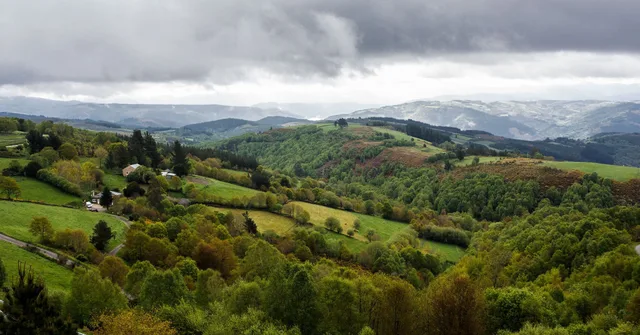
From Oviedo the route heads west through Grado and Salas into the Cantabrian mountains. The stages around Tineo, Pola de Allande and Grandas de Salime climb and drop hundreds of metres a day, with the high, exposed Hospitales route — past the ruins of medieval pilgrim hospitals — as the highlight for those with clear weather. After the Salime reservoir the route crosses into Galicia at A Fonsagrada, then descends through Lugo, the only city in the world still surrounded by a complete Roman wall.
From Lugo the walking is gentler, through farmland to Melide, where the Primitivo meets the crowds of the Camino Francés for the last 50 kilometres into Santiago.
Walk the Camino Primitivo with Camino.Today
Plan your stages on the map, see the elevation profile and the weather for every hour of your walk, find albergues along the way and talk to pilgrims on the same route — free, offline-ready, in English, Spanish and Russian.
Twelve to sixteen days from Oviedo, including the two Francés stages at the end. The mountain stages are short in kilometres but long in hours.
When to walk
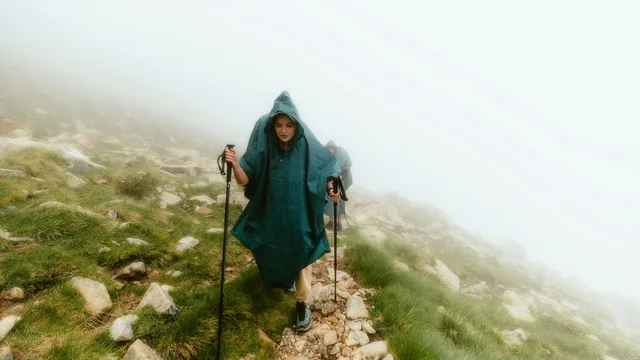
May to October. Snow and fog can close the Hospitales route outside those months, and the alternative through Pola de Allande is used instead. Even in summer, pack for rain and cold on the high stages.
Getting to the start
Oviedo has direct trains from Madrid and León and an airport with connections to Madrid and Barcelona. Pilgrims on the Camino del Norte can join the Primitivo from Villaviciosa via the connection over the hills to Oviedo.
Difficulty
Hard. The most elevation gain of any main route, with long stretches without services.
Places along the way
Oviedo
Start, Asturias
The capital of the Asturian kingdom in the ninth century, when Alfonso II walked to Santiago and started the whole tradition. The cathedral holds the Holy Chamber with its relics; the pre-Romanesque churches of Santa María del Naranco and San Miguel de Lillo stand on the hill above the city.
Salas and Tineo
Km 45–70
Two mountain towns: Salas with its medieval tower and the Narcea valley, Tineo at 700 metres with the first long views of the Cantabrian range you are about to cross.
The Hospitales route
Km 95–115
The heart of the Primitivo. Above Borres the path climbs to the Puerto del Palo at 1,146 metres past the ruins of three medieval hospitals for pilgrims — Paradiella, Valparaíso and Fanfarón — on an open ridge with nothing but heather, wind and the whole of Asturias below. In bad weather the lower route through Pola de Allande is used instead.
Grandas de Salime
Km 135
Reached after a dramatic descent to the Salime dam and a climb back out. The town's ethnographic museum recreates the life of the Asturian countryside a century ago.
A Fonsagrada
Km 165, Galicia
The highest town of the route and the first in Galicia, named after a fountain said to have flowed with milk for a poor widow at the request of St James.
Lugo
Km 225
The only city in the world encircled by a complete Roman wall: two kilometres, ten gates and a walkway on top that pilgrims traditionally follow around the old town. Inside, the cathedral and the tapas streets of the Rúa Nova.
Melide
Km 280
Where the Primitivo meets the Camino Francés. The pulperías here serve octopus with paprika and olive oil on wooden plates; after three weeks of solitude the crowd on the final stages takes some getting used to.
Stages
Every pilgrim walks the Camino Primitivo at a different pace, so this page does not prescribe daily stages. In the Camino.Today app you pick any two towns on the route and get the stage between them — distance, walking time, elevation profile and the weather for each hour of the walk. Plan the whole Camino stage by stage before you leave, or decide each morning how far you go today; the plan is yours to change at any time.
Where to sleep on the Camino Primitivo
270 places to sleep in 75 towns along this route, 149 of them pilgrim albergues — with prices, beds, photos, contacts and the map.
Norte to Primitivo linkLeaves the Camino del Norte at Villaviciosa and climbs over the hills to Oviedo, where the Camino Primitivo begins.43.1 km
Towns along the way
Distances from Oviedo. Every town and village within a kilometre of the path, as shown in the app.
0 kmOviedo
4.2 kmSan Lázaro de Paniceres
15.1 kmPremoño
20.8 kmPeñaflor
28 kmSan Juan de Villapañada
49.9 kmEl Llanón
66 kmTineo
72.7 kmPiedratecha
76.1 kmVillaluz
81.9 kmBorres
107.5 kmSanta Maria de Lago
111 kmBerducedo
115.5 kmLa Mesa
124.5 kmEmbalse de Salime
130.6 kmGrandas de Salime
140.1 kmPeñafuente
144.1 kmAlto de Acebo
167.1 kmParadavella
178.7 kmO Cádavo Baleira
184.9 kmVilabade
208.9 kmLugo
216.2 kmSeoane de San Xoán do Alto
222.3 kmBacurín
255.3 kmMelide
258.5 kmRaído
293.6 kmSan Paio
300.1 kmSan Marcos
305 kmSantiago de Compostela
Common questions
How long is the Camino Primitivo?
320 km from Oviedo to Santiago de Compostela, with about 10,379 m of climbing along the way.
How many days do you need to walk it?
Most pilgrims take 12-16 days, which works out at roughly 20 to 25 kilometres a day. You can walk it in fewer days or split it across several trips — the route is the same.
How difficult is the Camino Primitivo?
Hard. The most elevation gain of any main route, with long stretches without services.
Where do you sleep on the Camino Primitivo?
There are 270 places to sleep along the route in 75 towns and villages, 149 of them pilgrim albergues. Each one has its prices, beds, photos and contacts on this site.
When is the best time to walk the Camino Primitivo?
Late April to early June and mid-September to mid-October are the most comfortable windows: mild weather, long days and everything open. July and August are hot inland and busy; from November to March many private albergues close.
What is the Camino Primitivo like?
From Oviedo the route heads west through Grado and Salas into the Cantabrian mountains. The stages around Tineo, Pola de Allande and Grandas de Salime climb and drop hundreds of metres a day, with the high, exposed Hospitales route — past the ruins of medieval pilgrim hospitals — as the highlight for those with clear weather. After the Salime reservoir the route crosses into Galicia at A Fonsagrada, then descends through Lugo, the only city in the world still surrounded by a complete Roman wall.
From the blog
Short, honest posts about walking to Santiago — gear, money, routes and the things nobody warns you about.