Long read · 19 min
When to walk the Camino: a month-by-month guide

There is no single best month. There is the month that fits the route you want, the crowds you can stand, the weather you can walk in and the beds you can find. Here is the whole year, honestly.
Ask ten pilgrims when to walk the Camino and you will get ten confident answers, because every one of them is describing the month they happened to walk. Someone who crossed the Meseta in a July heatwave will tell you never to go in summer. Someone who had a whole albergue to themselves in February will tell you winter is the secret. Both are right about their own Camino and wrong about yours.
The honest answer has three parts: what the weather does on the ground you will actually be walking, how many other people will be walking it with you, and what is open when you get there. Those three things change every month, and they change differently on every route. This guide goes through all of it — season by season, route by route — so you can pick a window instead of a myth.
The short version
If you want one answer and are walking the Camino Francés: late April to early June, or mid-September to mid-October. Long days, mild temperatures, everything open, crowds heavy but manageable. Those two windows are the sweet spot for almost every route, and they are the sweet spot for a reason.
If you want to avoid people more than you want to avoid rain: March, or late October into November. You trade some albergues and a lot of sunshine for silence.
If you can only go in summer: go anyway, start early each day, and think hard about the Norte or the Primitivo instead of the Francés. July and August are hot, crowded and loud on the Francés, and perfectly good on the coast.
If you can only go in winter: the Francés is the only route where that is straightforward, and even there you will be planning around closed albergues and one closed mountain pass. It is beautiful, and it is not for a first Camino.
Now the long version.
Four climates, not one
The Camino is not a place, it is a line across half of Iberia, and the weather along that line has almost nothing in common from one end to the other. On the Francés alone you cross four distinct climates in five weeks.
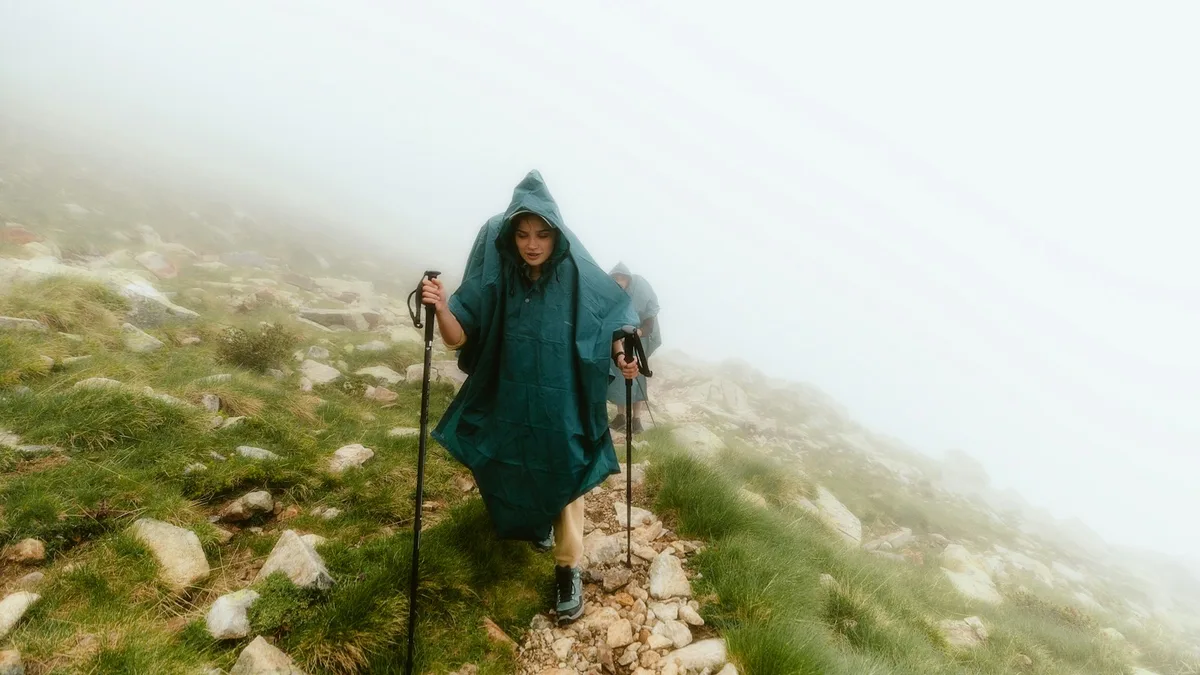
The Pyrenees and Navarre. Mountain weather: cold and snowy from November to March, wet and changeable in spring, warm and often stormy in the afternoons of summer. The Napoleon Route out of Saint-Jean-Pied-de-Port climbs to 1,400 metres, and it is the one stretch of the Camino where weather can genuinely hurt you. Fog, wind and sudden snow have killed pilgrims here in spring and autumn, not only in winter.
The Meseta. The high plateau between Burgos and León, roughly 800 to 900 metres up, with no shade and no sea to soften anything. It is a continental climate: bitterly cold and windy in winter, with frost on the ground well into April, then baking from mid-June to early September, with afternoons of 35 to 40 °C and no tree for ten kilometres. The Meseta is the reason summer on the Francés has a bad name. It is also glorious in May, when the wheat is green, and in October, when it has turned gold.
The mountains of León and Galicia. From Astorga the route climbs again, over the Montes de León at Cruz de Ferro (1,500 metres) and then O Cebreiro (1,300 metres) into Galicia. These passes get snow from November to April and rain the rest of the year. O Cebreiro in a January blizzard is a different planet from O Cebreiro in June.
Galicia. Atlantic weather, all year. Galicia is green because it rains — around 150 days a year in Santiago, and more in the hills. Winters are mild but wet; summers are warm but rarely hot, and even in July a grey, drizzly day is normal. The last hundred kilometres are the kindest stretch in every season and the most crowded in most.
The other routes have their own versions of this. The Norte is Atlantic from start to finish: mild, wet, windy, rarely extreme. The Primitivo is the Norte's mountain cousin: the same rain, but at altitude, with real snow in winter on the Hospitales stretch. The Portugués is the gentlest climate of all — Atlantic on the coast, a little warmer inland, with a rainy season from October to April and a dry, hot summer. The Vía de la Plata starts in Seville, which means Andalusian heat: from June to September the first two weeks of that route are simply dangerous to walk in the afternoon, and the sensible advice is not to walk them at all.
Keep that map in your head and the rest of this guide makes sense.
Month by month
January
Weather: cold everywhere, snow on every pass. The Meseta sits around freezing by day and well below at night; Galicia is 8 to 12 °C and wet. Days are short — light from about 8:30 to 18:00.
Crowds: the emptiest month of the year. A few hundred pilgrims a week reach Santiago, most of them walking the last hundred kilometres.
Infrastructure: on the Francés, the municipal and parish albergues that stay open all year are enough to get you through, but you will walk longer stages between them and you will sometimes be the only guest. Most private albergues are closed. The Napoleon Route is closed by law; you take the Valcarlos road. On every other route, January is for experienced walkers with a plan and a phone full of numbers to call ahead.
February
Weather: much like January, often with the worst snow of the year in the mountains. The one difference is the light: the days are noticeably longer by the end of the month.
Crowds: still almost nobody. Carnival week brings Spaniards to the towns, not to the trail.
Infrastructure: as January. A few private albergues on the Francés reopen in the last week of February; most wait for March.
March
Weather: the turn. The Meseta is still cold and often wet, with frost most mornings, but the afternoons warm up. Galicia is at its wettest — March and April are the rainiest weeks of the year in the north-west. Snow is still possible at Cruz de Ferro and O Cebreiro, and the Napoleon Route stays closed until the end of the month.
Crowds: building slowly. The last week of March is the first real wave, especially if Easter falls early.
Infrastructure: most private albergues on the Francés reopen through March. On the Portugués nearly everything is open by mid-month. The Norte and Primitivo are still patchy; on the Primitivo the Hospitales route over the mountains is often still under snow.
April
Weather: unstable and beautiful. April on the Francés can give you a week of sunshine and then three days of horizontal rain, sometimes with snow on the passes. Temperatures are 10 to 18 °C by day on the plateau, warmer in Galicia. The countryside is at its greenest.
Crowds: the season begins in earnest. Easter week (Semana Santa) is the single busiest week of spring — Spanish and Portuguese walkers fill every albergue from Sarria to Santiago, and on the Portugués from Tui. After Easter the numbers keep rising to the May peak.
Infrastructure: effectively everything is open by mid-April on the Francés and Portugués. The Napoleon Route opens on 1 April, weather permitting — the police still close it on bad days. The Norte is open but not all of it; some coastal albergues wait for May.
May
Weather: the best average weather of the year on almost every route. Warm days (18 to 25 °C), cool nights, long light, the Meseta green and flowering, the passes clear. It still rains — this is Spain's north, not its south — but a wet day in May is a shower, not a season.
Crowds: the busiest month of the year on the Francés, and close to it on the Portugués. May brings more pilgrims to Santiago than any other month, and the last hundred kilometres run at capacity: municipal albergues in Sarria, Portomarín and Palas de Rei fill by early afternoon. Before Sarria it is busy but not desperate.
Infrastructure: everything is open, staffed and stocked.
June
Weather: summer arrives. The first half of June is often perfect — warm, dry, the longest days of the year, light until after 22:00. The second half is when the Meseta starts to bake, with the first 35 °C afternoons. Galicia stays pleasant.
Crowds: very busy, a fraction below May. The school year ends in the last week of June across Spain and the family groups start.
Infrastructure: everything open. This is also when the summer-only albergues and bars in the smallest villages appear.
July
Weather: hot. The Meseta and the Rioja run 30 to 38 °C most afternoons, with the occasional run above 40. Storms build over the mountains in the afternoons. Galicia is 22 to 28 °C, and wet days are rare. The Norte and the Portugués coast are the good places to be: 20 to 26 °C, sea breeze, sunshine.
Crowds: heavy everywhere and rising toward the 25 July feast of St James, which fills Santiago and the last hundred kilometres to bursting. Groups of Spanish and Italian teenagers walk in July with the parish; expect albergues in the last stages to be taken over by fifty singing fifteen-year-olds.
Infrastructure: everything open, but municipal albergues in Galicia hit capacity by noon in the second half of the month, and the bed race is real.
August
Weather: the hottest month on the plateau and in the south, a touch cooler than July on the coast. Late August brings the first real storms and, in Galicia, the first hint of autumn rain.
Crowds: the busiest month on the Norte and the Portugués, because all of Spain and Portugal is on holiday, and the second busiest on the Francés after the 15 August bank holiday empties out the cities. Coastal albergues on the Norte fill early; the beaches are full; the towns are loud until 2 a.m.
Infrastructure: everything open. Prices at private albergues and pensions peak on the coast.
September
Weather: the heat breaks in the first two weeks. By mid-September the Meseta is back to 22 to 28 °C by day, cool at night, and the light turns golden. It rains more in Galicia than in July, but not much more. The vineyards of Rioja and Bierzo are being picked.
Crowds: the second peak of the year, close to May. The first week is quieter as the summer walkers go home; from the second week it fills with Northern Europeans, Americans, Koreans and retired Spaniards who waited for the heat to pass.
Infrastructure: everything open. Some summer-only bars in the villages close after the first weekend.
October
Weather: autumn proper. The first half is usually dry and mild, the second half turns wet, and by the end of the month the Galician rain has set in. Days shorten fast — it is dark by 19:30 at the end of October, and the clocks go back on the last Sunday. Snow on O Cebreiro is possible from mid-month, though rarely serious.
Crowds: busy in the first half, thinning through the second. The 12 October holiday brings a last Spanish wave.
Infrastructure: most things stay open until the end of the month; a few private albergues in the smaller Meseta villages close after the 12th, more after All Saints.
November
Weather: wet, and cold on the plateau. November is the rainiest month of the year in much of northern Spain. The Meseta gets its first frosts and fogs; the passes get their first lasting snow. The Napoleon Route closes on 1 November.
Crowds: low. A few thousand pilgrims across the month, mostly on the Francés, mostly walking the last stages. You will have albergues to yourself, and you will also have long evenings with nothing open but the bar.
Infrastructure: the shutters come down. Private albergues on the Francés close through November, some for the winter and some for good; the municipal network stays open and is enough. On the Norte and Primitivo, whole stretches lose their pilgrim beds and you fall back on pensions. Many bars in the smallest villages close for the winter.
December
Weather: winter. Cold, short days (light from 8:45 to 17:45), snow on every pass, rain in Galicia, fog on the plateau. Santiago at Christmas is lovely and grey.
Crowds: the lowest of the year until the last week, when a few hundred Spaniards walk from Sarria to arrive for New Year.
Infrastructure: as November, with more closures. Call ahead every evening for the next night. Carry food; do not assume the village will have a shop open.
The crowds, honestly
Around half a million people collected a Compostela in Santiago in each of the last few years, and about half of them walked the Francés. That average hides an enormous swing: May and September each bring several times the pilgrims of any winter month, and in the last hundred kilometres the difference between a Tuesday in February and a Saturday in May is the difference between an empty dormitory and a queue outside the door at 13:00.
Three things drive the crowds, and it helps to separate them.
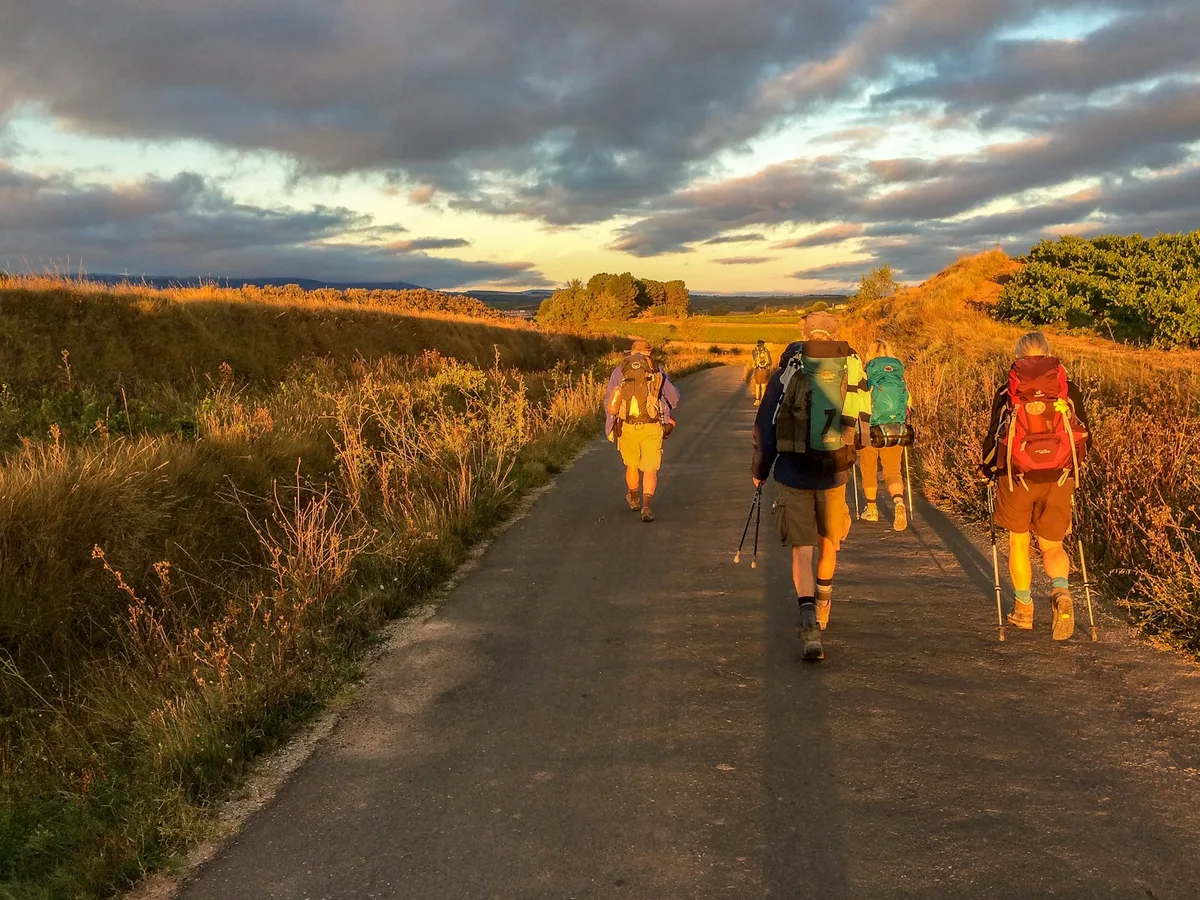
The calendar. Easter week, the May and June long weekends, the 25 July feast of St James, the 15 August and 12 October holidays and the last week of December all bring short, intense waves of Spanish and Portuguese walkers, nearly all of them on the last hundred kilometres of the Francés or the last hundred of the Portugués from Tui. If your dates put you in Sarria or Tui during one of those weeks, book or expect to walk further.
The distance from Santiago. Everything is busier in the last hundred kilometres, in every season, because that is the minimum for a Compostela and most people walk the minimum. Before Sarria, the Francés in May is busy; after Sarria it is a procession. The Portugués has the same shape from Tui. The Norte and the Primitivo merge into the Francés at Arzúa and Melide respectively, so even those quiet routes end in the crowd.
The route. For every hundred pilgrims on the Francés there are roughly thirty on the Portugués (central and coastal together), eight on the Norte, five on the Primitivo, three on the Inglés and one or two on the Vía de la Plata. Choosing a route is the single most effective way to choose your crowd. A May Primitivo is quieter than a February Francés from Sarria.
The bed race — the anxious habit of leaving at 5 a.m. to reach the next municipal albergue before it fills — only really exists in the last hundred kilometres between April and October, and on the Norte coast in August. Everywhere else, in every season, a normal walking day gets you a bed. If you find yourself racing, the fix is to walk one stage off the guidebook rhythm: stop in the village *before* or *after* the one everybody stops in, and the dormitory is half empty.
What is open when
Pilgrims worry more about closures than they need to, and less about the specific ones that matter.
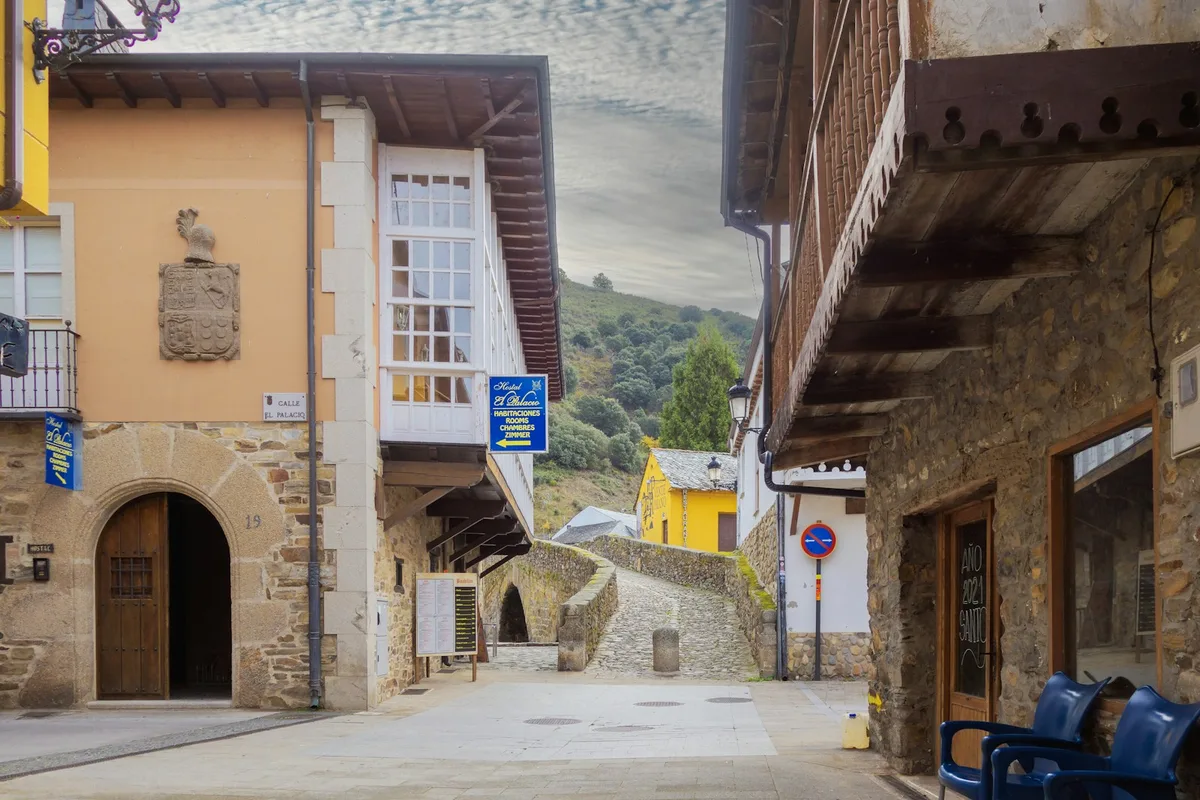
Municipal and parish albergues on the Camino Francés are open all year, with a handful of exceptions that close for a few weeks in January for maintenance. That network alone — Roncesvalles, Pamplona, Logroño, Burgos, León, Astorga, Ponferrada, and the Xunta albergues in Galicia — gets you across in any month. The Xunta de Galicia keeps its public albergues open every day of the year.
Private albergues are businesses, and most of them close when the pilgrims stop coming: typically from early November to mid-March on the Francés, longer on the Norte and Primitivo, shorter on the Portugués. A few stay open all winter in the bigger towns. The ones that close are the ones with the good showers and the communal dinners, which is why winter feels sparser than the numbers suggest. Camino.Today shows each place's opening season on its page, and we update it from the owners' own information — but in November and March it is still worth a phone call the day before.
Pensions and hotels are open all year in every town of any size, and in winter they are often cheaper than in summer. On the Norte and the Vía de la Plata in the off-season they are the backbone of the route.
The Napoleon Route over the Pyrenees is closed by decree every year from 1 November to 31 March, and in bad weather outside those dates. The alternative through Valcarlos is open all year and is a perfectly good walk. Do not be the pilgrim who tries the high route in April fog because the guidebook said it was prettier.
The Hospitales route on the Primitivo — the high, wild, waymark-only stretch after Borres — has no official closure but is unwalkable in snow and dangerous in fog. From November to April take the Pola de Allande road. The albergue at Berducedo will tell you which way people went yesterday.
Bars, shops and pharmacies in the villages of the Meseta and the Bierzo are the thing to actually plan around in winter. Between November and March the one bar in a village of forty people may close for a month, and the next one is twelve kilometres on. Carry food for the day and check the evening before.
Pilgrim offices and cathedral hours do not change with the season, but the pilgrim mass in Santiago and the Botafumeiro are more frequent in high season, when groups pay for it. The Pilgrim Office queue at midday in May can be an hour; in February it is five minutes.
Route by route
Camino Francés. Best: May, early June, mid-September to mid-October. Good: April, late June, late October. Hard: July and August across the Meseta (heat), December to February (cold, snow, closures). Possible in every month, which is what makes it the first Camino for most people.
Camino Portugués (central). Best: April to June, September to October. Good: March, November — this is the mildest route in winter, and much of it stays open. Hard: July and August only because of the crowds from Tui; the heat inland is real but not Meseta-real. The most forgiving route for an off-season walk.
Camino Portugués (coastal). Best: May, June, September. Good: April, October, and July if you like a beach at the end of every stage. Hard: August, when the entire Portuguese coast is on holiday and the albergues fill by noon; November to March, when the Atlantic weather is relentless and many coastal albergues close.
Camino del Norte. Best: June, September. Good: May, July, early October. Hard: August (crowds, prices), November to April (rain, closures, short days, a lot of road walking in the wet). The Norte's weather is never extreme but its off-season is genuinely closed.
Camino Primitivo. Best: late May to June, September. Good: July and August — this is the summer route, cooler than the Francés and far quieter. Hard: October to April, because of snow and fog on the Hospitales stretch and the thin infrastructure. Do not attempt the mountains in winter without local advice.
Camino Inglés. Best: May, June, September. Good: April, October, and honestly most of the year — it is short, low, Galician and close to everything. Hard: nothing in particular except the rain of November to March.
Vía de la Plata and Sanabrés. Best: March to early May for the whole route; late September to October also works. Good: February from Seville if you accept some cold. Hard: June to September in the south — the heat between Seville and Salamanca is dangerous, not merely unpleasant — and December to February in the Sanabria mountains. The most season-sensitive route on the peninsula: get the timing wrong and it is not a hard Camino, it is a bad idea.
Camino de Invierno. Best: October to April — that is the point of it; it exists as the low-altitude winter alternative to O Cebreiro. Good: any month. It is quiet all year and the Ribeira Sacra is beautiful in autumn.
Holy Year 2027
Every year in which the feast of St James, 25 July, falls on a Sunday is a Jacobean Holy Year, and the next one is 2027. In a Holy Year the Holy Door of the cathedral opens, the plenary indulgence is granted, and pilgrim numbers jump — in the last one, 2021 and 2022 combined because of the pandemic, they set records that still stand. Expect 2027 to be the busiest year on the Camino ever, with the last hundred kilometres of the Francés at capacity from Easter to October. If you are planning 2027, the quiet windows shrink to early April, the first week of June and the second half of October, and the quiet routes matter more than ever. If you are not attached to the year, walk in 2026 or 2028 and thank yourself.

The whole Camino in your pocket


Packing for the season, in one paragraph each
Spring: rain jacket that actually works, a warm layer for the passes, gloves for the first hour, shorts for the afternoon. Your pack will be heavier than in summer and that is correct.
Summer: sun hat, sunscreen, two litres of water capacity across the Meseta, a headlamp for the 5:30 starts, and the discipline to stop by 13:00. A silk liner instead of a sleeping bag; the albergues have blankets.
Autumn: as spring, plus a headlamp again for the last two weeks of October, when you will start in the dark.
Winter: proper waterproofs, a real sleeping bag rated to freezing because some albergues do not heat the dormitory, microspikes if you intend to cross O Cebreiro after a snowfall, and a phone list of every open albergue for the next three days. Winter pilgrims carry three kilos more and walk two kilometres less per day, and both are fine.